
Johannes Kieding – If we catastrophize what can happen around clarification and challenge, then people might be tempted to avoid it altogether. I see that as a mistake.
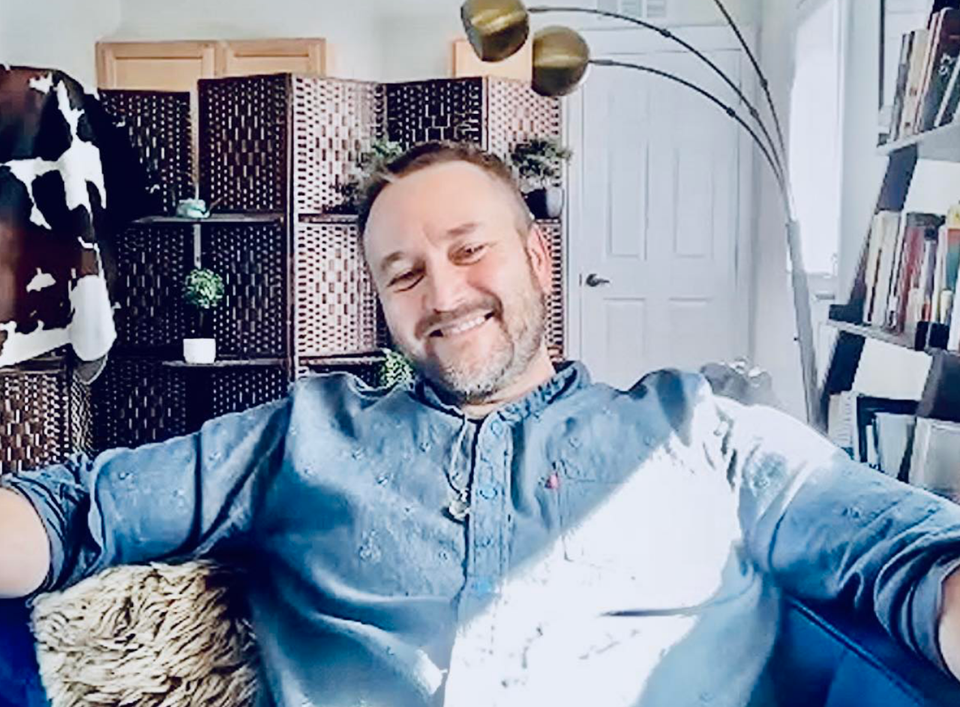
Welcome to Sweden!
Thank you, that means a lot.
It's a happy surprise for us. Is there something you'd like to share about your move?
Yeah, sure. Basically it's very important for me to keep my family safe, and with the current political climate in the US, I didn't feel like I could do that. So it started ramping up with ICE and that sort of a thing, and my wife is ethnically Hispanic/Mexican, and our son is half Mexican. They're US citizens and everything, but the way ICE is operating, that's not a guarantee of safety. Not only that, there's a lot of school shootings in the United States. As a parent, that's just a nightmare to have to worry about, you know, your kid being blown to bits. I know Sweden had a school shooting, I think it was maybe a year ago, but by and large, you have far fewer school shootings. And so I'm thinking I want to keep my family safe. I want my son to have a happy, safe childhood. I think Sweden is the way to go.
I sure hope so too. I'm very sorry to hear about the situation you were facing. I knew this is happening but I didn't know that it was the context of your move.
Yeah, that is the context. We got here about two weeks ago now. The first week was horrible in terms of jet lag, just awful, but we're finally turning that corner and we're with the Swedish rhythm now.
About your upcoming presentation, was there something in particular that drew you to present this particular case now? What significance does it have for you?
Well, first of all, this was a patient–I'm no longer working with this patient–but he was very near and dear to me. I have a lot of affection for him. Just looking at the videos, I can re-experience some of that affection. Also, he's a bit of a character. He's an unusual kind of person. So the primary reason is that I just have a strong liking for him.
Then there's some other secondary reasons. For example, in my opinion, the whole bit about helping patients turn against their defenses–it seems to me that that is an under-emphasized component in some of the contemporary teaching out there. I don't know why, and I could of course be wrong, but that is an impression that I have, that there's an emphasis on pressure to affect quite a bit. But usually that doesn't go that well until the patient really turns against their resistance. This case that I will be presenting is going to highlight the importance of helping the patient turn against their resistance.
”The whole bit about helping patients turn against their defenses — it seems to me that that is an under-emphasized component in some of the contemporary teaching out there.”
So for example, even when there's feelings that are clearly mobilized, some might say, just go for it. Ask about the feelings. Push for feelings. You'll see that I don't always do that. I say things like:
“So I can see that you're partially connected now to your feelings, but you're still half a step removed from it. Let's see what you do about that.”
There's more pressure on the resistance until the patient is genuinely turning against the resistance. That's a very important thing, I think that component could be under-emphasized. So I want to showcase that.
From the description you’ve shared of the case, this is a patient who was not completely forthcoming about his problems and his will, what he wanted from you. He wasn't always clear with you what was going on during sessions either.
Well, for the initial handful of sessions, he was not honest with me because it came out later that at the start of those initial sessions, he would have a shot of alcohol to calm his nerves. He did have a problem with alcohol.
In that situation even if he would show feelings, could you be sure whether any feelings coming up are genuine before he has let you know what he's up to?
Probably not. I mean, how can you have a genuine emotional connection with anyone if they're withholding really important information? There would be a wall of secrecy at that point.
I see the point here about making sure the patient is really turning against the defense before proceeding. Why, do you think, is it not emphasized currently in teaching or in writing about ISTDP?
You know, I'm not sure. Also, I could be wrong in my impression. Maybe it is plenty emphasized and I just haven't been privy to that. That's also possible. I think that there are understandable concerns about ISTDP therapists facilitating an interpersonal conflict where the patient is not grappling with internal conflicts, but instead it’s becoming a fight with the therapist. That's not a good thing and I think everybody knows that.
”If you don't do it skillfully, it can become a battle of wills between patient and therapist. Obviously, that's something that we should all try to avoid.”
I think that when you try to do defense work and help people turn against their defenses, if you don't do it skillfully, it can become a battle of wills between patient and therapist. Obviously, that's something that we should all try to avoid. My opinion is that the solution to the risk of interpersonal conflict is not to give up on the project of active defense work altogether. Just because interpersonal conflicts can happen, and it is problematic, it doesn't mean we should neglect the importance of helping people turn against their defenses.
I’ve supervised a good deal of people for a number of years now, and from some of my observations from those experiences I think that therapists can get anxious around the patient having mixed feelings towards them. And it’s a fact that when we interfere or interrupt defenses, this elicits anger, especially if it is a major column of defense that we are interfering with.
”If we appropriately address defenses the healthy part will be grateful, and the part invested in avoidance will have, you know, negative feelings”
The thing is this, that either way the patient will have mixed feelings towards us. If we do not address defenses, the avoidant part, the part of the patient invested in not facing things, will be happy. But the healthy part wanting to get better will have negative feelings. And vice versa: if we appropriately address defenses the healthy part will be grateful, and the part invested in avoidance will have, you know, negative feelings.
The key is to make sure that when we address defenses and feelings come up, that we work with this process in a way so that the feelings are ultimately taking place inside and not outside a conscious alliance. If it’s outside a conscious alliance, there won’t be the mixture of feelings, but the patient will primarily just be angry because they have been provoked, and the part of them invested in self-defeat and avoidance will at some level be gratified.
So what I am saying is that if we skillfully address defenses, there should be a mixture of feelings that are taking place in some sort of conscious alliance. Either way, negative feelings towards the therapist are inevitable, and if we are thinking that this can somehow be avoided and that any and all negative feelings towards the therapist are a result of therapist misattunement, then we might not sufficiently address defenses and resistance.
So the concern about interpersonal conflict might lead us to step back from confronting the patient with their defenses?
Yes, because the act of trying to turn someone against their defenses includes challenge. You are casting doubt. Even if you are gentle about it and tentative about it, even just saying:
“You know, I notice that you're avoiding eye contact, could that potentially have a negative impact here with what we are trying to do?”
Is that definition of challenge in the widest sense? I've seen different definitions and I think people have said that Davanloo’s definition of challenge changed over time, through the different phases. So some definitions would include defense identification even without mentioning the price or inviting the person to let go of the defense. I guess this would delineate the interpersonal boundaries we might cross?
I do think that just identifying a defense includes a soft challenge.
I think there’s a reason that, if you look at how Davanloo presents the Central Dynamic Sequence in Unlocking the Unconscious—the yellow book—he places clarification and challenge on the same line. He collapses those two categories into one category. He calls it clarification and challenge.
So there is soft challenge even in just very gentle pointing out, you know:
“Hey, I notice this. Can we think about what's happening here with avoiding eye contact or becoming vague…”
You can do it in the most gentle of ways. But it's the fact that you're even raising it to the patient that alerts the patient:
“Oh, well the therapist has some kind of question or doubt about this behavior of mine.”
”It can lead to problems. But people can also overcorrect and think that just because it can lead to problems, it should be avoided or minimized in importance. I think that that is a real risk that parts of our community may have overcorrected”
There's no way around that. And that's okay. It's not like it’s a bad thing. It can lead to problems. But people can also overcorrect and think that just because it can lead to problems, it should be avoided or minimized in importance. I think that that is a real risk that parts of our community may have overcorrected, or there's at least a potential for that.
Aha, I see. I would speculate that the allure of ISTDP is in no small part some mode of speaking to people with directness and honesty and out of concern. Many of us might have sought out the method for those reasons. So it's a bit ironic if that would become a problem. What type of experiences do we have where we start worrying more about rupture?
Well, speaking for myself, earlier in my career, I would sometimes blow people out of the water. I would be too heavy-handed, too intense, in the beginning without enough of a conscious therapeutic alliance. You know, my caseload would sometimes hemorrhage as a result.
Or there's cases, I haven't really had that much myself fortunately–but there are instances where clients feel like they've been re-traumatized. So I think those concerns are totally valid. We should be worried about those things. But it doesn't mean that we should over-correct and think that somehow we need to abandon or be hyper-concerned about clarification and challenge. I think that's a major mistake.
I'm wondering if it's even possible to develop as a therapist without failures and without losing clients in some way. If we don't lose them by overstepping or premature challenge we might lose them some other way. Do you think the risk is greater when we're too active?
Yeah, there's probably always going to be some sort of learning curve. But I think the idea is that as we go through our learning curve, we should try to minimize creating unnecessary suffering as much as possible. So, yes, on the one hand, it's inevitable that we go through a learning curve and it's inevitable that we're going to lose some clients, or some clients aren't going to feel helped or maybe put off. That is all inevitable. But to try to minimize suffering that is not needed, not necessary, I think that's a good thing.
I'm not against the idea of being cautious or thoughtful about problems around iatrogenic responses from patients or misalliances or re-traumatization. I think we should be very thoughtful about it. I totally agree with that. But I'm saying that there could potentially be a problem around overcorrection and being too worried—so worried that we actually pull our punches and we neglect doing what needs to be done.
When I was in core training I think the general discourse at the time was focused on better safe than sorry, to rather invite feelings and see what happens. That could set you up in a way where you can press and press for feelings without really having the patient turning against their defenses.
Totally. So my two cents are that it's possible to learn how to be skillful in how we clarify defenses, meaning engaging in soft challenges, so as to mitigate against the potential downside, the potential risk of misalliances or re-traumatization or iatrogenic responses from the patient. There are ways to execute our clarifications and our soft challenges in ways that reduce those odds. That's really important and if we catastrophize what can happen around clarification and challenge, then people might be tempted to avoid it altogether. I see that as a mistake.
Correct me if I'm wrong, but my impression is that you have, from what I've seen, heard and read of yours, a reading of Davanloo which emphasizes his warm, humanistic aspects. Other readings are sometimes more focused on an authoritarian mode in how he speaks to patients. I was curious what has led you to this reading and if it has changed over time in some way?
First of all, I think both assessments are true. For example, when I met Davanloo and saw his work in 2012 and 2013, I saw a good chunk around the culture taking place during the conferences that I didn't care for and that did seem authoritarian. For instance, someone raised a critical question and others would bristle. Davanloo would not address the criticism. But then I saw some of his work that had that humane component that I talk about. So, I don't know for sure, but my impression is that later in Davanloo’s career, he did become authoritarian.
He was always authoritative, obviously, but that's very different from being authoritarian. You can be authoritative, but still have humility and humanity. But anyway, the main thing was that my teacher, Marvin Skorman, who supervised me weekly for a decade, had that kind of humanity and humility in spades. And he actually credited this to Davanloo. He said this was the essence of what Davanloo was imparting and conveying. According to Marvin, in Davanloo's heyday, in his prime, he actually embodied this.
”Davanloo seemed to become dogmatic and authoritarian. But if you look at the earlier transcripts, you see this kind of humanity that I talk about.”
I think it was Marvin who speculated and hypothesized that there was something potentially about Davanloo becoming famous and getting so much recognition and visibility that somehow knocked him off his center. After that, he seemed to have just kind of lost his mojo, and he seemed to become dogmatic and authoritarian and all of that. But if you look at the earlier transcripts, you see this kind of humanity that I talk about. It's all there in the earlier transcripts.
How do you think one should read the later Davanloo?
I still think there is value in his later work. I think there's things there to take to heart. But we can also approach that period with some skepticism. The way I look at it is this–Is there a relationship that's actually forming here? Or is the therapist just throwing techniques at the patient?
So, personally, I'm skeptical around what's called rapid mobilization, where from minute one in the first session, the patient is getting peppered with questions like:
“So what feelings are coming up? What do you feel towards me? What do you feel?”
I'm not a fan of that personally, because I don't see a relationship being formed. I just see a therapist who is being a technician and throwing techniques at the patient.
Whatever happened with him, one could say that the turn in the later part of his career, his style and his stance, surely did a lot to mythologize him as a character and perhaps the method itself. In terms of legacy, it might have been a successful move to become authoritarian.
Yeah, maybe. It's also possible, though, that if he had stayed true to the way he operated earlier on, that he might have been just as big of a success or maybe even a bigger success. So, who knows? It's hard to know for sure. But there are a lot of people that are drawn to certainty. When someone says, This is definitely the way it is—a lot of people are going to be drawn to that, because it alleviates the anxiety around being uncertain. That's why cults get followers.
Perhaps a necessary component of new psychotherapy models? Then later, there is room for digesting and adding humility to make it acceptable to a wider audience. Should we especially favor the early texts when we look for and try to understand the spirit of the method?
Well, people should do whatever they want to do. Personally, that's what I gravitate towards. I find that appealing, to look at his earlier work in the 1970s, and also in the 1980s. But then once you get to the 1990s and onward, that's when he seemed more single-mindedly obsessed with rapid mobilization. That's just less appealing to me. I don't see a relationship forming there as much. But the 70s and the 80s, I think that's pure gold myself.
You have announced a presentation where you will share your first ever ISTDP session as a patient. Most all of us have entered therapy, especially ISTDP, at some point during our professional development, but as far as I know this is the first time someone is sharing the video material. What has inspired this generosity on your part?
It's because I'm so passionate about what we were just talking about, the form of ISTDP that emphasizes humanity and the real relationship, where the techniques are operating more as if in the background rather than the foreground.
So for example, it was a three hour therapy session but for the first major chunk of the session, there was a whole lot of dynamic inquiry into my past and what brought me to therapy. There was a whole lot of relationship building. There was a whole lot of helping me get acquainted with the themes in my life that I have strong feelings about, and then putting me on the triangle of conflict, all just in a very conversational way without a whole lot of added pressure, simply helping me see my own triangle of conflict and my different defenses.
There was also a way the therapist had of stepping out of the shoes without withdrawing and becoming passive or disengaged. He remained quite active. I definitely had a lot of transference reactions where I saw him through the prism of my father, even though he wasn't acting like my father at all. And I started beating up on myself and feeling embarrassed and feeling like I'm a fuck up and a loser. He dealt with all of that by remaining quite engaged and active. He didn't feel the need to withdraw or think that he had to sit on the sidelines.
”We did have an unlocking of the unconscious. It was powerful and it was healing. But if the therapist had been overly anxious or impatient to get to that, it would not have happened.”
That's the other thing I'm passionate about—ways to step out of the shoes without thinking that silence needs to somehow be the default intervention. I mean, silence can be a great intervention but there are contexts where it’s better if the therapist remains more overtly active. Anyway, then downstream in that session, we did have an unlocking of the unconscious. It was powerful and it was healing. But if the therapist had been overly anxious or impatient to get to that, it would not have happened. It happened, in my opinion, because he took his time to develop a relationship with me and to get out of the shoes the way he did.
The other thing that was major for me—it was huge—is how he explained to me that what I thought of as anger was not anger at all. It was mostly anxiety and discharge, like a temper tantrum. So understandably I wanted nothing to do with anger as long as I thought that it had to do with acting out or having a tantrum or something. He [the therapist] really spelled it out for me in a very clear way, almost like just pure psychoeducation. Like:
“Hey, that's actually not anger.”
And it was a game changer. When he said that, I was like, Oh, really? That just changed everything for me. So it shows the power of helping the patient see that sometimes what they think of as certain emotions, that's not it.
When did you first watch the tape?
A few years later. Then maybe a year ago or something I saw it in the corner of my eye sitting on some bookshelf, and I thought, Wait a minute, that might actually make for a really good teaching tape. Again, it's about showcasing a form of ISTDP that leads with humanity, that is not just about throwing techniques at the patient.
For example, within the first two minutes of the session, I took a deep sigh—a spontaneous deep sigh—I think it was when he asked for specific instances of the problem areas. I took a spontaneous deep sigh, and he didn't press for feelings just because he saw a deep sigh. He probably just filed it away, Okay, we're in the right zone, doing the inquiry. But somehow there seems to be this prevalent idea in pockets of our community that as soon as you see a sigh, you need to start badgering the patient for their feelings. I think that's misguided. “Badgering” is obviously my own interpretation, as I am sure people would just say that they are pressing towards feelings.
When you first watched the tape, was it to understand your own process as a patient, or was it for learning therapy?
My memory is cloudy because this was many years ago, but I think it had to do with wanting more self-development and consolidating insights around what I went through as a patient. I think I then watched it some other time a little later and it had to do with me being a therapist and the perspective of learning from what the therapist was actually doing. When I first watched it, it was looking at it from me being the patient, and how can I consolidate the insights, and then later it became about the perspective of the therapist and teaching other therapists
Did you know at the time when you entered therapy that you wanted to be a therapist?
I had no idea.
I think it’s common when therapists or aspiring therapists enter ISTDP they don't want to be filmed. I myself was like that. So there's a shortage of tapes of therapists' trial therapies.
Yeah, it makes sense. The therapist that I had, he did not ask for permission to use it for teaching. He never did either. So he just recorded it for his own work, in case we would plateau or get stuck or something. But he actually didn't have any ambitions or interest to use it for teaching.
I see.
I came to think of a few more things about the case I will be presenting at ISTDP Academy.
Let’s hear it!
I talked about how I'm interested in showcasing this because there's a real focus on helping him turn against resistance. The other thing is that we're going to see ego-syntonic projection of superego. Earlier in our work, the patient reported that he experienced me as a bully. Then you'll see classic restructuring. You'll see how I slow way down and how I begin to help him undo that projection by clarifying the corners on the triangle of conflict.
Because that work of restructuring was so effective, you'll see that in a subsequent session, I'm able to be very, very vertical using quite unremitting pressure and challenge. Then even when the patient in that session says, basically in so many words, You're bullying me, I'm able to just brush that aside by saying:
“We both know that's not true and still you're avoiding your feelings. What are you going to do about that?”
”When we do the earlier legwork dealing with syntonic resistance, it frees up the treatment to be more vertical and intensive.”
So I was able to be that confrontational and just brush aside the idea that I was bullying him because of the earlier legwork of restructuring that projection, until his reality testing was very solid. That's something that I'm passionate about showcasing as well. That when we do the earlier legwork dealing with syntonic resistance, it frees up the treatment to be more vertical and intensive.
Another point about this case is that it highlights that the Conscious Therapeutic Alliance is not a static ‘one-and-done’, where you talk about it once, and then it's over. Instead, it's something that has to be nurtured throughout, and sometimes even renegotiated. For example, at one juncture in the treatment, we came to a slightly different agreement about what we are doing together, and it made a huge difference for the rest of the treatment.
I don't see that spoken about a whole lot in contemporary teaching, so I'm passionate about showcasing how the Conscious Alliance is a living thing, not a one-and-done thing. You often need to revisit it and nurture it throughout, and sometimes renegotiate it. You'll see a little bit of that.
”Usually there's a lot of primitive rage and then the patient is sobbing and the face is all contorted and those are wonderful. It's a real thing. They're dramatic unlockings of the unconscious. But there's quiet unlockings, at least in my estimation.”
Then the last thing is this whole idea about a quiet unlocking of the unconscious. Meaning that not all unlockings of the unconscious are all that dramatic or filled with fireworks. That's certainly one kind of unlocking of the unconscious where you apply a lot of pressure and challenge and it's like this pressure cooker that builds and builds and then it explodes suddenly with affect. And usually there's a lot of primitive rage and then the patient is sobbing and the face is all contorted and those are wonderful. It's a real thing. They're dramatic unlockings of the unconscious.
But there's quiet unlockings, at least in my estimation. It's where you don't really have such an obvious buildup but suddenly the patient is emotionally choked up. You can hear it in their voice and see it in their face. They're full of emotion. Suddenly they're remembering something from their distant past. Suddenly their mind is filled with this very vivid imagery. That's another kind of unlocking, I call it a quiet unlocking. We'll see that.
We tend to hear more often about the big, dramatic, more theatrical unlockings. With the mode of working that you've outlined, what would you say is most common for patients to experience?
Probably the more quiet ones. But there's certainly treatments and cases where the more dramatic form is also taking place.
I would think so too, at the least in the tapes of mine and colleagues. If we can call it that when there's some intensity of emotion, the patient starts speaking in a more grounded way, more to the point, more directly revealing the sources of conflict. Do you think this happens without going through the entire central dynamic sequence?
Maybe. Or important aspects or phases of the central dynamic sequence actually took place. But it wasn't linear. Maybe it was circular. Or maybe one period was very, very brief, like the phase of pressure. Maybe it was just one interaction or comment or something. It could be that it's [the different phases of the CDS] all in there. But not the way you might think just through a textbook perspective of the Central Dynamic Sequence.
Do you think spontaneous unlockings without going through the whole central dynamic sequence in a linear fashion, would those mostly tend to be of this type?
Yeah. I do think it's important, from the point of view of semantics—it's probably worth discussing the difference between a breakthrough and an unlocking, at least for academic and research purposes. It's probably good to have that distinction down pat.
I wager that in order for something to be truly considered an unlocking, there needs to be some psychological material that surfaces that was outside of conscious awareness and it just bubbles up. Maybe some distant memory or some really vivid imagery that at least thematically connects to the person’s childhood somehow. So something from the past, whether it's vivid imagery that relates thematically or an actual memory or something of that nature—probably has to bubble up in order for it to be considered, you know, truly ripped from the unconscious as opposed to just a breakthrough.
So a breakthrough of only feelings would not necessarily be an unlocking.
Exactly. I think some people put stock in the idea that there has to be, in order for the unlocking to be considered real, there has to be a transfer of images where you're focused on someone in the current or the transference and then you get a transfer to a core genetic figure. I think what needs to be part of an unlocking is something that is either directly related to the patient's childhood, like an actual memory surfacing spontaneously, or just vivid imagery that bubbles up and it's thematically related to their childhood. I think one of those two needs to be there in order for it to be classified as an unlocking. Those are really just my two cents.
There is this paper on trying to operationalize unlockings of the unconscious but I can’t remember which definition it used, I’ll try to find and link to it (Hoviatdoost et al., 2023). It seems very important to discuss how we define these concepts. What type of research do you think we need more of?
I'm aware of it, it's on my radar, but I don't think I read it. I don't consider myself a researcher, nor do I actually consider myself an academic. I'm intermittently connected to institutions like the Rochester Institute of Technology and Arizona State University that sometimes hire me to supervise their clinicians, but I’m not a hired faculty member or anything. I was managing editor of the new journal of ISTDP for a while, but I consider myself just someone who does the work at a ground level. I'm in the trenches. I see half of my caseload as clients and half of it as supervisees. I'm primarily passionate about the application side of things.
But from a layman's perspective, or from my perspective anyway, it would seem to me that more research that highlights the curative mechanism would be helpful, so that there is robust empirical evidence about the actual mechanisms underlying psychological healing and change.
Last question, what’s your flavor as a therapist in terms of something edible?
Maybe an apple. It's hopefully palatable, but it can be appropriately tart, meaning there can be an appropriate level of intensity injected into the treatment, even though it's overall palatable and humanitarian.
Is there a certain type of apple that comes to mind?
I like… I think they're called Honeycrisp. They're crunchy, you take a bite and it has a real crunch. There's a little bit of sour notes. There's some sweet notes, and a little bit of tart.
 Niklas Lanbeck
Läs mer om vårens ISTDP Academy
Missa inte Johannes presentation! Anmälan är öppen till ISTDP Academy.


Diskussion